Hantavirus Global Situational Briefing — June 8, 2026
The Argentina-CDC joint rodent survey launches today in Malargüe, Mendoza — Day 1 of the most targeted origin investigation yet, after the Dutch couple's travel through the Mendoza wine region was confirmed. Spain's 12 asymptomatic hospital contacts cleared Gómez Ulla on June 7 and enter 14 days of home isolation; Case 2 remains at UATAN with a persistent low-grade fever. France's ECMO patient enters Day 32 with 11 consecutive days of public silence. The cluster holds at 13 cases and 3 deaths.

The joint Argentine-US rodent survey in Mendoza launches today. Spain's 12 hospital contacts walked out of Gómez Ulla on June 7. The cluster holds at 13 cases and 3 deaths — Day 13 with no new infection.
The Mendoza mission begins
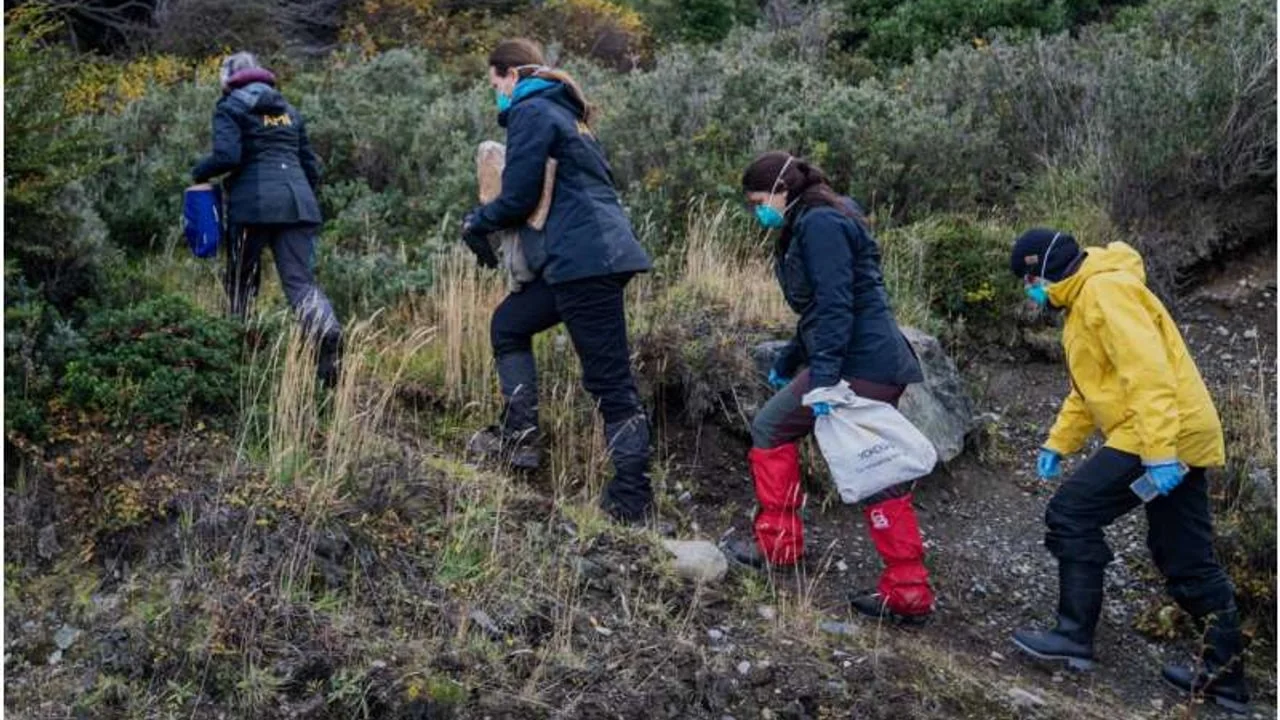
The most focused scientific effort to identify the origin of the MV Hondius outbreak began this morning. A joint team from Argentina's ANLIS Malbrán institute and the US Centers for Disease Control and Prevention is operating in Malargüe, Mendoza Province through June 12 — trapping rodents, drawing blood from carcasses, and transferring samples under cold chain to the main Malbrán laboratory in Buenos Aires.1
The site selection is not arbitrary. A Malbrán spokesperson confirmed to the Associated Press that the Dutch couple who became the cluster's first deaths had driven through Malargüe during the final leg of their months-long Argentina itinerary — passing through the Mendoza wine region before continuing northeast to Misiones, then returning south to board the ship in Ushuaia.2 Malargüe sits at the northern edge of Argentine Patagonia, within the known endemic range of Andes virus, and would be the geographically coherent exposure point if the couple had contact with rodent droppings or urine there.
Malbrán head Claudia Perandones met with CDC investigators in Argentina on June 6 to finalise logistics. Teams will work in full PPE. Results from the Mendoza trapping will take up to a month.1
The parallel Ushuaia survey — 150 box traps set in May around the city and in Tierra del Fuego National Park — remains under analysis in Buenos Aires. Perandones noted that Tierra del Fuego has recorded no hantavirus in 30 years of mandatory reporting, a fact that has given Ushuaia authorities grounds to push back against the implication that their city was the exposure site.2 Ushuaia results are expected mid-June.
Epidemiologists have noted that the typical incubation period before symptoms appear is roughly three weeks, though it can extend to eight.1 If the Dutch couple were exposed in Malargüe, the timeline would be compatible with symptom onset during the voyage.
正在加载内容卡片…
Authorities have acknowledged they may never be able to pinpoint the exact location, but the Mendoza findings — whatever they show — will offer usable data on the geographic extent of the ANDV reservoir and carry real implications for how Argentina manages the disease's endemic range.
Spain: contacts cleared, Case 2 still febrile
All 12 asymptomatic contacts who had been under surveillance at Hospital Central de la Defensa Gómez Ulla in Madrid left the facility on June 7 after returning negative on a final PCR test.3 The five Catalan residents among them were transferred home under health authority protocols, confirmed by the Generalitat de Catalunya's Department of Health.
Under Spain's revised quarantine protocol — 28 days of hospital isolation followed by 14 days of home isolation for contacts who test negative — all 12 must remain at home for an additional two weeks, completing the full 42-day precautionary period.3
Spain's second confirmed case — who tested positive during routine PCR surveillance on May 25 — remains at UATAN, the High Level Isolation and Treatment Unit at Gómez Ulla.4 Spain's Ministry of Health stated that the patient continues to present low-grade fever (febrícula), with no deterioration in clinical status. Discharge remains pending — the protocol requires three consecutive symptom-free days and two negative PCRs.3
Spain's first case — the 70-year-old passenger who was the cluster's initial confirmed Spanish infection on May 11 — was discharged from Gómez Ulla around June 4–5 after three symptom-free days and two negative PCRs, becoming the cluster's first recorded recovery.
France: Day 32 on ECMO, public silence continues
The 65-year-old French woman remains on ECMO at Hôpital Bichat AP-HP in Paris. The last confirmed clinical update was May 28, when health authorities stated there had been "no further deterioration." That is now 11 days without a public status update — the longest such gap since her ECMO support began.
All 26 French contacts remain in mandatory hospital isolation, with PCR tests three times weekly; all have continued to test negative throughout. France received favipiravir tablets via the EC-Japan emergency procurement on May 28.
US: 13 remain at NQU, June 22 monitoring endpoint
Thirteen US passengers remain at the National Quarantine Unit (NQU) at the University of Nebraska Medical Center in Omaha. The CDC's situation page, last updated June 2, confirms that five people have been released to complete monitoring at home — all symptom-free and meeting the established public health criteria — while 13 remain at the facility.5
State-level monitoring is active in Arizona, California, and Oregon for passengers released from the NQU. Dr. Stephen Kornfeld, the retired oncologist from Bend, Oregon who treated passengers on board, has been home since June 1 with 24/7 monitoring continuing through June 21. Jake Rosmarin of Boston committed to completing the full 42 days at the facility; his window ends June 22 — the same date as the two New York passengers now home under on-site state surveillance.
No US cases have been confirmed. CDC continues to operate its Emergency Operations Center at Level 3.
Global cluster status
Total as of June 8: 13 cases (11 laboratory-confirmed Andes virus, 2 probable); 3 deaths. No new case has been confirmed since May 26 — Day 13 of no new infection.
| Country | Confirmed | Probable | Deaths | Current status |
|---|---|---|---|---|
| Netherlands | 4 | 1 | 2 | Crew and RIVM staff cleared; vessel in transit to Svalbard |
| South Africa | 2 | — | 1 | Survivor recovered; contacts traced, no local transmission |
| Spain | 2 | — | — | Case 1 discharged; Case 2 still hospitalised at UATAN (low-grade fever) |
| Switzerland | 1 | — | — | Still hospitalised; sequence 98.7% match to 2018 ANDV Neuquén strain |
| France | 1 | — | — | On ECMO at Bichat; no update since May 28 |
| Canada | 1 | — | — | Yukon resident; stable, monitoring ongoing |
| Saint Helena | — | 1 | — | British national on Tristan da Cunha; no update |
WHO's effective reproduction number estimate remains Rt ≈ 0.7 as of May 22, indicating declining transmission.6
正在加载内容卡片…
MV Hondius and the road to June 13
The ship departed Rotterdam on June 6 and is now in transit to Longyearbyen, Svalbard, ahead of its first post-outbreak voyage on June 13.7 The 25 crew members and 2 RIVM medical staff who completed Dutch quarantine aboard left the vessel when it cleared Rotterdam, all PCR-negative throughout the 21-day monitoring period. The 38 Filipino OFW crew members remain under a 42-day precautionary quarantine.
GGD Rotterdam-Rijnmond cleared the vessel on May 30 following a final inspection confirming effective cleaning and disinfection across all eight decks by contractor EWS Group.2
Other monitoring and surveillance
Victoria, Australia: Hantavirus infection was made an urgently notifiable condition in Victoria state effective June 4, 2026.8 The designation requires clinicians to report confirmed or suspected cases immediately. Australia quarantined six MV Hondius passengers — four Australians, one British resident, and one New Zealander — at the Bullsbrook Centre for National Resilience in Western Australia from May 15; all have remained PCR-negative throughout.
Argentina domestic surveillance: The Bariloche ICU case (45-year-old male admitted June 4 at Ramón Carrillo Hospital, Río Negro Province) had no last public update as of June 7. Argentina's 2026 national tally stood at 47 confirmed hantavirus cases through Epidemiological Week 20, reflecting endemic transmission independent of the MV Hondius cluster.
EU favipiravir: The European Commission's emergency procurement for additional Fujifilm tablets beyond the initial 1,400-tablet Japan donation remains ongoing. The US PREP Act declaration covering favipiravir for Andes virus exposure remains in force through July 18, 2026.
Key dates ahead
- June 8–12: Argentina-CDC joint rodent survey, Malargüe, Mendoza — Day 1 today
- June 13: MV Hondius Svalbard voyage restart
- June 21: Dr. Kornfeld (Oregon) home-monitoring endpoint
- June 22: US 42-day monitoring endpoint for May 11 NQU cohort
- Mid-June: Ushuaia/Tierra del Fuego rodent survey results expected
- ~1 month: Malargüe rodent survey results (samples to Buenos Aires lab)
- July 18: US HHS PREP Act favipiravir authorization expires
参考来源
- 1Argentina expands hantavirus probe, sending teams to trap and test rats in Mendoza
- 2MV Hondius hantavirus outbreak 2026: timeline, cases, contact tracing
- 3Todas las personas aisladas como contactos por hantavirus vuelven a sus casas
- 4The contacts of the hantavirus outbreak from MV Hondius leave Gómez Ulla after testing negative
- 5Andes Virus Outbreak on a Cruise Ship: Current Situation
- 6WHO Disease Outbreak News 2026-DON604
- 7MV Hondius To Resume Sailing 34 Days After Hantavirus Outbreak
- 8Notification of hantavirus infection — Victoria health advisory
围绕这条内容继续补充观点或上下文。