Climbing Mount Fuji: The Complete Guide for Foreign Visitors (2025 Season)
A practical deep-dive for foreign climbers planning their Fuji ascent: all four trails compared by altitude, duration, and crowd level; 2025 permit rules and the ¥4,000 fee; mandatory gear checklist; mountain hut timing strategy; and transport options from Tokyo.
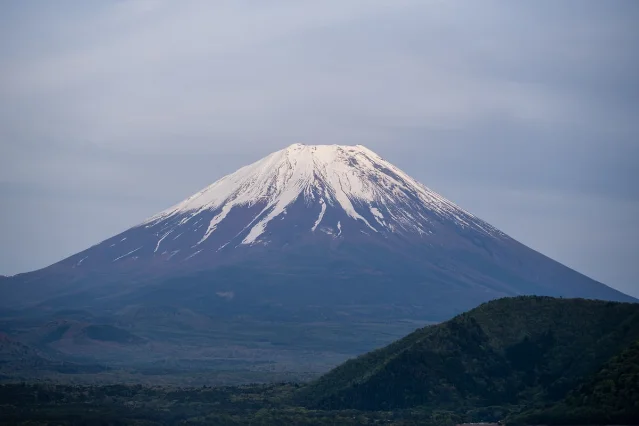
At 3,776 meters, Mount Fuji is Japan's highest peak — and it draws roughly 200,000 climbers every year. A significant share of those are foreigners, and for good reason: the mountain is technically accessible without specialist skills, the trail network is well-marked, and reaching the summit for sunrise ranks among the most memorable experiences in Japan. But accessible doesn't mean easy. The altitude is real, the weather turns fast, and the rules have changed significantly in recent years. This guide covers everything you need to plan a safe, realistic ascent.
At a glance
| Detail | Info |
|---|---|
| Summit elevation | 3,776 m |
| Official season | Early July – mid September |
| Number of trails | 4 (Yoshida, Subashiri, Gotemba, Fujinomiya) |
| Most beginner-friendly | Yoshida Trail (Fuji Subaru Line 5th Station) |
| Shortest route | Fujinomiya Trail |
| Trail access fee | ¥4,000 (all trails, 2025) |
| Yoshida Trail daily cap | 4,000 hikers |
| Trailhead gate hours | Closed 2 pm – 3 am (non-hut-stay climbers) |
The four trails
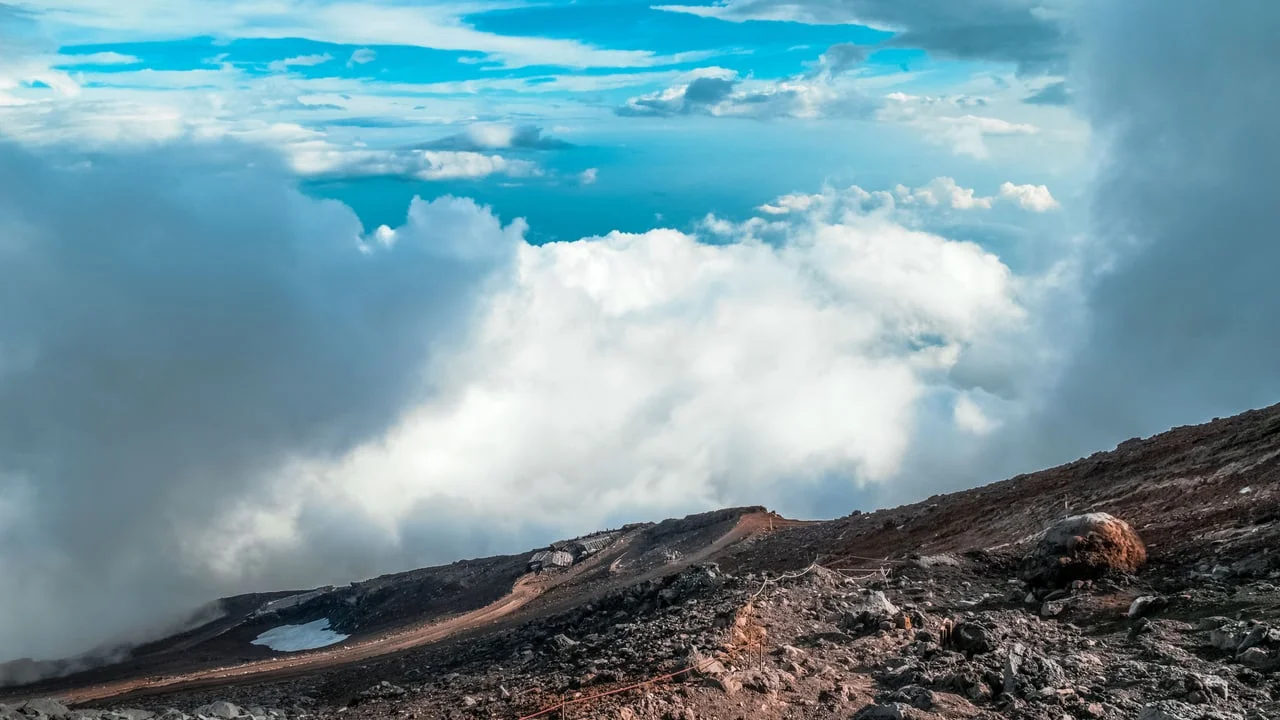
Mount Fuji has four starting points — all called the "5th Station" — at varying altitudes on different sides of the mountain. Each leads to the same crater rim at the summit.
Yoshida Trail (Fuji Subaru Line 5th Station)
- Starting altitude: 2,305 m
- Ascent: ~6.8 km / approx. 5 hours
- Descent: ~4.3 km / approx. 3 hours
- Access: Direct buses from Kawaguchiko Station (50 min, ¥1,950) and Shinjuku (150 min, ¥3,800)
- Why choose it: The most mountain huts (dozen+ between stations 7 and 8), separate ascent and descent paths, and the sunrise occurs on this side of the mountain. Easiest access from Tokyo.
- Note: Subject to a daily limit of 4,000 hikers; pre-book online at asoview.com.
Fujinomiya Trail
- Starting altitude: 2,400 m — the highest of the four
- Ascent: ~4.3 km / approx. 5 hours
- Descent: ~4.3 km / approx. 3 hours
- Access: Buses from Shin-Fuji Station (120 min, ¥2,740) and Mishima Station (90 min, ¥3,500)
- Why choose it: Shortest total distance, convenient for travelers arriving via Tokaido Shinkansen, roughly six huts along the route.
Gotemba Trail
- Starting altitude: 1,440 m — the lowest of the four
- Ascent: ~10.5 km / approx. 9 hours
- Descent: ~8.4 km / approx. 4 hours
- Access: Buses from Gotemba Station (30 min, ¥1,280)
- Why choose it: Far fewer crowds than Yoshida; the descent uses a long volcanic sand-slide called the sunabashiri that's genuinely fun. A serious physical commitment though — budget a full day.
Subashiri Trail
- Starting altitude: 2,000 m
- Ascent: ~6.9 km / approx. 7 hours
- Descent: ~6.2 km / approx. 4 hours
- Access: Buses from Gotemba Station (60 min, ¥1,800)
- Why choose it: Passes through forest in the lower sections, joins the Yoshida Trail at around the 8th station, no daily cap.
Difficulty and fitness level
The climb requires no rope, technical gear, or mountaineering experience. The terrain is steep and volcanic in sections — loose gravel, large boulders — but the trail is always clearly marked.2
The main challenges are:
- Duration and stamina: A two-day hut-stay itinerary is the standard approach. Attempting a same-day ascent and descent (8–12 hours of walking) is not recommended — it's more tiring, increases the risk of altitude sickness, and leaves you exposed to afternoon cloud cover.
- Altitude sickness: The air at the summit is noticeably thin. Headache, nausea, and dizziness are common above 3,000 m. Climbing slowly and staying hydrated reduces risk; an overnight hut stop at the 7th or 8th station helps your body acclimatize. Canned oxygen (available at huts and 5th stations) helps manage symptoms, but descending is the only reliable cure.
- Weather: Conditions change rapidly. Summit temperatures can drop below 0°C even in August. Strong winds are frequent. Afternoon thunderstorms are common during the climbing season.
Best season
The official season runs from early July to mid-September.3 Outside this window, climbing above the 5th stations is prohibited by law. Trails are unmaintained, huts are closed, and snow and ice conditions make it genuinely dangerous.
Within the season:
- Early July weekdays — fewest crowds but more unstable weather due to the rainy season tail
- Late July to mid-August — peak crowds, especially around the Obon holiday (mid-August) and weekends
- September — more settled weather, thinner crowds, but some huts start closing before September 10
The best compromise for most foreign visitors is a weekday in the first week of August or early September before the season closes.
Permits, registration, and the 2025 rules
All four trails now charge ¥4,000 per person. Online advance registration and payment are required:
- Yoshida Trail: asoview.com
- Fujinomiya, Gotemba, Subashiri: fujisan223registration.com
Same-day walk-up payment is possible at the trailhead, but the Yoshida Trail's daily cap of 4,000 means you risk being turned away on busy days (the cap has been hit on some peak-season days in past seasons).2
Gate hours: Trailheads on all routes close 2 pm to 3 am for climbers who don't have a mountain hut reservation. This rule was introduced to stop "bullet climbing" — overnight ascents that caused a spike in altitude sickness and accidents. If you have a hut booking, you can enter during closed hours.
Mandatory gear check (Yoshida Trail): Starting in 2026, all hikers on the Yoshida Trail are checked at the trailhead for three items. Missing any means being turned back:2
- Trekking shoes
- Cold-weather clothing
- Rainwear
While this check is formally new for the Yoshida Trail, bringing all three is simply good practice on every route.
What to bring
Mandatory (non-negotiable)
- Ankle-supporting hiking boots — sneakers are not adequate on the rocky, steep upper sections
- Waterproof rain jacket — not a light packable; the mountain generates its own weather
- Warm layers — summit temperature regularly drops to near 0°C even in August; bring a fleece or insulated layer
- Headlamp or head torch — essential if you plan any movement before dawn; the trail can be dark between huts
Strongly recommended
- Trekking poles — significant help on the steep descent sections
- Cash (¥5,000–¥10,000 minimum) — mountain huts and all toilet facilities are cash only; toilet fees run ¥200–¥300 per use
- 2+ liters of water — huts sell drinks but at escalating prices the higher you go
- Snacks and a packed meal — energy drops fast at altitude
- Thin gloves — useful both for warmth and for navigating rocky sections with hands
- Small canned oxygen — available at the 5th station and huts; good to carry one as a backup
Optional
- Wooden hiking stick (hiroshima) — wooden staves sold at the 5th station for ¥1,500–¥2,000; mountain huts brand them with hot irons for a fee, turning them into a keepsake
Where to get your gear
You don't need to arrive in Japan fully kitted out. Renting is well-developed around Fuji and is almost always the better call for a one-time climb.
Renting near the trailhead
Yamarent operates rental counters directly at the Fujinomiya 5th Station and at Kawaguchiko (Yoshida Trail), open 9:00–16:00 from July 1 to September 10. Pick up your gear at the trailhead before you start, return it on the way down — no logistics overhead.
KOBE OUTDOOR (mtfujirental.com) delivers gear to your hotel anywhere in Japan. Order online, receive it 1–3 days before your climb, and return via any 7-Eleven with the prepaid label included. Full English support.
| Service | Pickup | 7-item set (2 days) | What's included |
|---|---|---|---|
| Yamarent | Fujinomiya / Kawaguchiko 5th Station | ¥16,000–17,500 | Rainwear, boots, backpack, poles, headlamp, fleece, gloves |
| KOBE OUTDOOR | Hotel delivery (¥3,500 incl.) | ¥23,040 | Same as above; GORE-TEX upgrade available |
A 7-item set covers everything mandatory. For most climbers this is all you need.
Buying new gear
If you plan to hike beyond Fuji, Montbell — Japan's leading outdoor brand — has stores in the Fuji region (Gotemba, Mishima). A full kit at mid-range Montbell prices runs roughly ¥90,000–130,000:
| Item | Approx. price |
|---|---|
| Waterproof rain jacket | ¥25,000–35,000 |
| Rain trousers | ¥12,000–18,000 |
| Hiking boots (mid-cut, Gore-Tex) | ¥18,000–30,000 |
| Trekking poles (pair) | ¥8,000–15,000 |
| Fleece jacket | ¥8,000–12,000 |
| 30L backpack | ¥10,000–18,000 |
| Headlamp | ¥3,000–6,000 |
| Gloves | ¥2,000–4,000 |
Buying makes sense only if you'll reuse the gear. For a single Fuji climb, renting wins on every dimension.
Note: Do not count on finding a proper outdoor shop in Fujinomiya town itself. The rental counter at the Fujinomiya 5th Station is your most reliable local option on that route.
Mountain huts and timing your ascent
The recommended itinerary for most climbers:
- Day 1 afternoon: Arrive at the 5th Station after noon; acclimate for 1–2 hours, then begin climbing
- Day 1 evening: Reach a hut at the 7th or 8th station (around 2,700–3,100 m); sleep a few hours
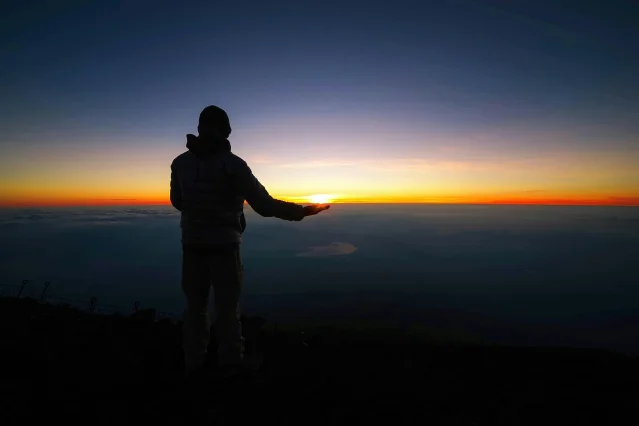
- Day 2 pre-dawn: Leave the hut around 1–3 am to reach the summit for sunrise (4:30–5:00 am in summer)
- Day 2 morning: Walk the crater rim (about 1 hour), then descend before afternoon clouds and heat
A hut stay costs ¥13,000–¥15,000 per person including two meals. The huts on the Yoshida Trail fill quickly in peak season — book several weeks ahead. Most huts on the Yoshida Trail have online reservation pages, but many don't offer English booking, so reservations may require patience with Japanese forms or booking through a tour operator.
Official climbing safety guide
The Japanese Ministry of the Environment published a 10-minute video walkthrough of the rules, clothing, and safety essentials — the English-audio version is the most practical pre-trip watch:3
コンテンツカードを読み込んでいます…
Getting to the 5th stations
All four 5th stations restrict private car access during the climbing season. Buses are the main option.
| 5th Station | From | Fare | Duration |
|---|---|---|---|
| Fuji Subaru Line (Yoshida) | Kawaguchiko Station | ¥1,950 one-way | 50 min |
| Fuji Subaru Line (Yoshida) | Shinjuku Station, Tokyo | ¥3,800 one-way | 150 min |
| Subashiri | Gotemba Station | ¥1,800 one-way | 60 min |
| Gotemba | Gotemba Station | ¥1,280 one-way | 30 min |
| Fujinomiya | Shin-Fuji Station | ¥2,740 one-way | 120 min |
| Fujinomiya | Mishima Station | ¥3,500 one-way | 90 min |
Practical notes for foreign visitors
- Language: Trail markers are in Japanese, but the Yoshida Trail in particular has extensive English signage and most 5th-station facilities have English-speaking staff. The official website (fujisan-climb.jp/en) is fully available in English.
- Payments: Bring cash. Card acceptance on the mountain is rare.
- No camping: Camping on the mountain is prohibited.
- No souvenirs from the mountain: Picking plants or taking rocks is prohibited.
- Garbage: There are no rubbish bins on the trail; carry a bag to pack out all your waste.
- Emergency: Call 110 (police) or 119 (ambulance/fire) from mobile — coverage exists on most of the mountain above the 5th station.
The official English-language Mt. Fuji climbing guide produced by Japan's Ministry of the Environment is a reliable first stop for current regulations and last-minute updates before your climb: fujisan-climb.jp/en/3
このコンテンツについて、さらに観点や背景を補足しましょう。