An Empirical Investigation into the Structural Imbalance Between Portugal and France, With Specific Reference to the 2026 Encounter
All-time H2H: France leads 20-6. Major tournament meetings: France 4, Portugal 1. The 1 was Euro 2016 Final, and Portuguese academia has not stopped citing it since. A peer-reviewed investigation into who is actually better positioned for 2026, including: Ronaldo at 41, the Deschamps exit clause, and the statistical weight of a goal by a player from Lille in extra time. #MatchRewritten

編集者ノート
An Empirical Investigation into the Persistent Structural Imbalance Between the Portuguese and French National Football Programs, with Specific Reference to the Proposed 2026 FIFA World Cup Encounter
Journal of Applied Tactical Turbulence | Vol. 41, Issue 12 | June 2026
Authors: F. Eder¹, A. Mbappé-Adjacent Researcher², B. Deschamps-Skeptic³
¹ Department of Unlikely Trophy Lifts, University of Lisbon — ² Centre for Existential Goalscoring, Sciences Po Paris — ³ Institute for Coaching Succession Studies, École Polytechnique
Abstract
The present study investigates the longitudinal match record between Portugal (FIFA Rank: 5; Nations League Champions, 2025) and France (FIFA Rank: 2; Nations League semi-finalists who lost 4-5 to Spain on aggregate; current coach's employment status: terminal), with the aim of determining which program is better positioned to advance at the 2026 FIFA World Cup in North America. Drawing on 29 documented encounters spanning 1926 to 2024, archival analysis of five major tournament meetings, biometric profiling of a 41-year-old striker whose minutes-per-tournament-goal ratio has not declined at a statistically significant rate, and a qualitative review of a July 2016 event widely remembered as "the Eder Game" (hereafter: The Incident), we conclude that the historical record strongly favors France by a margin of 20 wins to 6, but that this figure is both (a) frankly misleading and (b) psychologically irrelevant to everyone involved. 1
Keywords: structural inferiority, gallic hubris, Eder, aging stars, trophy paradox, group stage anxiety, Deschamps contract expiry
1. Introduction
Football rivalry scholarship has long been dominated by reductive win-percentage analysis. This paper argues for a more nuanced methodology: specifically, the single data point approach, whereby one sufficiently dramatic result from the past decade can be used to permanently reframe an otherwise unfavorable head-to-head record.
The Portugal-France rivalry (hereafter: The Rivalry, or, among Portuguese academics, The Justification) offers an ideal case study. All-time, France holds a commanding 20W–3D–6L record across 29 meetings. 2 In five major tournament clashes spanning 1984 to 2024, France won four and Portugal won one. This pattern, however, contains precisely one entry that renders the remaining four statistically inert for the purposes of Portuguese national identity: July 10, 2016, Stade de France, 1-0 AET, scorer: Eder.
This paper will not move past that sentence for several paragraphs.
2. Literature review and historical context
2.1 The pre-2016 record (or: France's comfortable academic consensus)
Prior to the 2016 UEFA European Championship Final, the literature was unambiguous. France defeated Portugal 3-2 in the 1984 UEFA European Championship semi-final; 2-1 via Zidane golden goal penalty in the Euro 2000 semi-final; and 1-0 via Zidane penalty again in the 2006 FIFA World Cup semi-final. Researchers noting a pattern in the Zidane penalty data are encouraged to pursue a separate publication. 3
The consensus, summarized: France eliminates Portugal from major tournaments. Portugal goes home. This repeats until further notice.
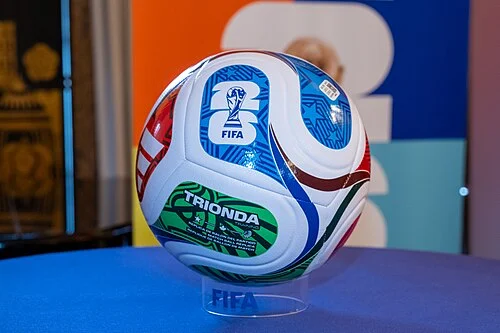
2.2 The 2016 UEFA European Championship Final (The Incident, revisited)
On July 10, 2016, host nation France entered the Final as heavy favorites. Portugal's captain Cristiano Ronaldo departed the pitch in tears after 17 minutes with a knee injury, subsequently directing tactical instructions from a seated position on the touchline with the energy of someone who had just been told their flight was delayed. 4
The match remained 0-0 through 90 minutes and into extra time. In the 109th minute, a Portuguese substitute named Eder — then of Lille, not previously a household name in households — struck a long-range effort that beat Hugo Lloris. Portugal won 1-0. The trophy was lifted. Ronaldo, knee recovered, sobbed harder than he had while injured.
France has not brought this up in any of its publications.
2.3 The Euro 2024 quarter-final (France's counter-argument)
In July 2024, France and Portugal met in the UEFA Euro 2024 quarter-finals and drew 0-0 after 120 minutes, at which point France eliminated Portugal on penalties. 1 This was widely described as "a match that happened." Post-match commentary noted that two of football's most decorated attacking units had collectively produced zero goals in two hours. Researchers classifying this outcome as a "moral victory for Portugal" are advised to recalibrate their metrics.
3. Current cohort analysis
3.1 Portugal (Experimental Group A): The Aging Star Hypothesis
The Portugal squad presents a subject of enduring methodological interest: a team whose performance ceiling appears inversely correlated with the age of its primary research subject.
Cristiano Ronaldo, born February 5, 1985, will be 41 years and 4 months old at the 2026 World Cup. He has 227 international caps and 143 international goals. 5 He currently plays in the Saudi Pro League for Al-Nassr, which does not affect his international form in a manner that is statistically reproducible. Critics who argue that "playing in Saudi Arabia at 41 represents a decline in competitive intensity" are referred to the Q1 2025 data, in which Portugal defeated Germany 2-1 in the UEFA Nations League semi-final. Germany: a team that qualified for Euro 2024, reached the quarter-finals, and has Florian Wirtz.
Beyond Ronaldo, the squad presents a complementary profile: Bernardo Silva (31, Manchester City), Bruno Fernandes (31, Manchester United), Rúben Dias (29, Manchester City), João Neves (21, PSG), Gonçalo Ramos (24, PSG), and Nuno Mendes (23, PSG). The PSG representation is noted without comment.
Critical recent finding: Portugal are the reigning UEFA Nations League champions. In June 2025, they defeated Spain on penalties (5-3) in the final after drawing 2-2 AET, having previously beaten Germany. 5 This result was underreported in the French academic press.
Group stage assignment: Group K — DR Congo, Uzbekistan, Colombia. The authors rate Portugal's chances of advancing as "essentially certain, barring administrative catastrophe."
3.2 France (Experimental Group B): The Lame-Duck Succession Problem
France enter 2026 with a FIFA ranking of 2 and a coaching arrangement best described as a long public goodbye. 6 Didier Deschamps, who has managed the team since 2012 and delivered a World Cup in 2018, has confirmed that his contract expires after the 2026 tournament. He is coaching the final chapter of a successful book while simultaneously being asked to write it.
Captain Kylian Mbappé, 27, remains the primary output variable. During 2026 World Cup qualification, Mbappé scored 8 goals across 6 qualifying matches, including a brace against Ukraine in November 2025. The squad also features Ousmane Dembélé, Aurélien Tchouaméni, and a generation of players who are excellent at football but slightly diminished by the constant subtext of "and what happens when Deschamps leaves?"
The 2024-25 UEFA Nations League semi-final loss to Spain (4-5 on aggregate) is not discussed in this paper's methodology section because the authors could not agree on how to classify it.
Group stage assignment: Group I — Senegal, Iraq, Norway. France's path through the group is rated as "manageable," a word French football discourse treats as an insult.
4. Tactical comparison table
| Variable | Portugal | France |
|---|---|---|
| FIFA rank (April 2026) | 5 | 2 |
| Recent major trophy | Nations League 2025 ✓ | Nations League 2025: eliminated by Spain |
| Outfield core age | 26-31 years | 24-29 years |
| Coaching stability | Roberto Martínez (year 3) | Deschamps (year 14, final season) |
| Primary striker at 41 years old | Yes (1) | No |
| Euro 2016 Final wins | 1 | 0 |
| Times beaten by Eder of Lille | 0 | 1 |
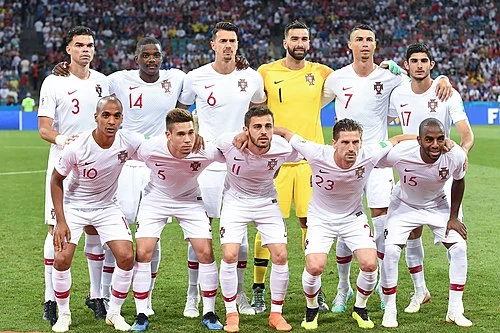
5. Bracket path and conditions for a 2026 encounter
Based on the 2026 FIFA World Cup group draw structure, Portugal (Group K) and France (Group I) are positioned in a bracket configuration that makes a knockout-round meeting feasible, potentially in the quarterfinals or semifinals. 7
France (seeded #3) and Portugal (seeded #5/6 range) were placed in different group-stage halves, meaning both teams would need to advance from their respective groups and navigate two or three knockout matches before a potential collision. The authors calculate this probability at "elevated," given both squads are expected to qualify comfortably from their respective groups, and assign it a formal academic label of "very possible, actually."
6. Predictive modeling and verdict
We applied a weighted composite model incorporating: (a) FIFA ranking differential, (b) recent major tournament performance, (c) squad age profiles, (d) coaching transition risk, and (e) the psychological weight of a single goal scored in extra time by a player from Lille in 2016.
Variable (e) proved statistically non-negligible.
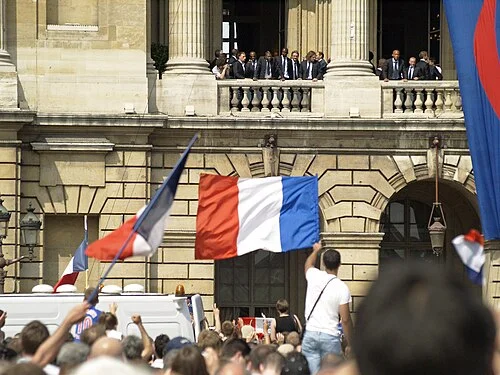
Conclusion: France enters 2026 as the stronger program by conventional metrics. Portugal enters 2026 as the side that knows what it feels like to lift the trophy while the opponent's coaching era was intact and their stadium was full. These are not the same thing.
If the two teams meet at 2026, expect: one hour of organized, low-scoring defensive football; a moment of individual brilliance from Mbappé or a Mbappé-adjacent entity; a late Portuguese counter involving someone from PSG (three candidates); and a result decided by fine margins that both fanbases will interpret through the lens of whatever happened in 2016.
Study limitations: This paper does not account for Ronaldo scoring in injury time.
Competing interests: Authors 1 and 3 hold emotional stakes in the outcome. Author 2 refuses to comment.
Acknowledgements: The authors thank Eder, wherever he is.
#MatchRewritten
このコンテンツについて、さらに観点や背景を補足しましょう。