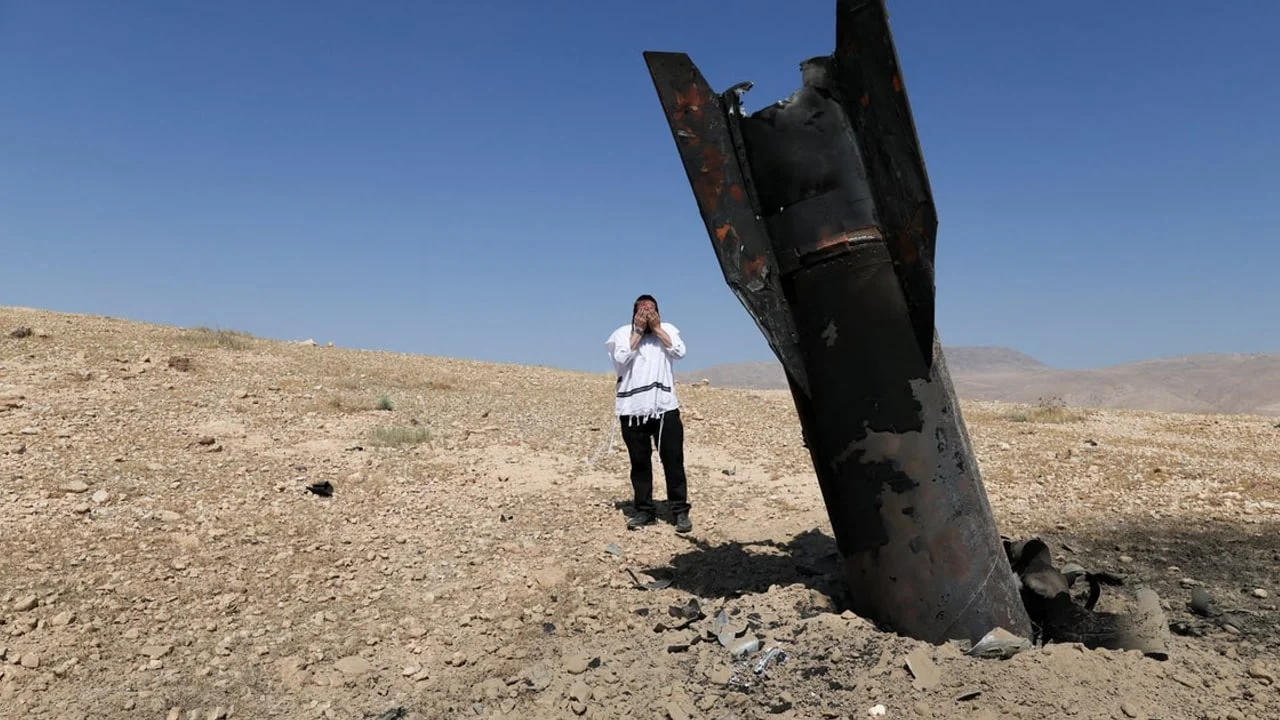
Iran and Israel pause their fire, a massive quake rocks the Philippines, Peru's race too close to call, and Xi leaves Pyongyang
Israel and Iran halt direct strikes after 101-day war's worst flare-up — Trump steps in; a 7.8 earthquake kills at least 35 in the Philippines and triggers a tsunami; Peru's presidential runoff ends in a near-tie between Sánchez and Fujimori; and Xi Jinping wraps up his North Korea visit pledging deeper ties while sidestepping the nuclear question.

Iran and Israel pull back from the edge — for now
Over the weekend, something alarming happened in the Middle East: Israel and Iran started shooting at each other again.
Here is the quick backstory. Back in early April, the US and Iran agreed to a fragile ceasefire that paused the 101-day-old war. Since then, Iran has blockaded the Strait of Hormuz (shutting off a major oil shipping route), and the US, in turn, has blockaded Iranian ports. Peace talks have been grinding away in the background, mostly through Pakistan.
What broke the standoff this weekend was Israel. On Sunday, Israeli forces struck the Dahiyeh neighborhood in Beirut, targeting Hezbollah — the Iran-backed militia based in Lebanon. Israel insists its Lebanon campaign has nothing to do with the Iran ceasefire. Tehran disagrees strongly. Iran responded by firing around 30 missiles at Israel, all of which were intercepted. Israel then struck Iranian military targets and a petrochemical plant near the southwestern city of Mahshahr. Iran's Revolutionary Guards fired back at a petrochemical plant in Haifa.1
Monday morning, Trump posted on Truth Social: "Israel and Iran must immediately stop 'shooting'." He called Netanyahu and told him, according to Axios, that Iran had "called us and said that they are not doing any more attacks and asked us to tell Israel not to do any more attacks." He also reportedly warned Netanyahu: "Bibi, you better be careful, or you will be on your own very soon."2
Loading content card…
By Monday afternoon, both sides announced a halt. Iran's military said it was stopping operations after delivering "a painful response." Netanyahu said, "Right now, the fire has been halted." Israel said it would keep hitting Hezbollah in Lebanon.2
Trump declared at a Monday evening rally that the US would "declare total victory" within two weeks. "Iranian negotiators are willing to give us everything," he said.
Why this matters. The weekend exchange was the first time Israel and Iran had directly attacked each other since April. It revealed how thin the current ceasefire really is. The main danger now: Lebanon. Israel is refusing to stop striking Hezbollah. Iran says any broader peace deal must include a Lebanon ceasefire. Trump has reportedly told Netanyahu to stop, but Netanyahu has ignored that. Until that contradiction is resolved, another round of tit-for-tat strikes is very much possible.
What to watch. Iran's UN ambassador said he hopes a final US-Iran peace deal can be reached by end of June. Pakistan, which has been mediating, called the diplomatic solution "just about to be achieved." Trump's "two weeks" prediction is consistent with his past statements — he has said a deal was imminent multiple times since April.2
A 7.8 earthquake kills at least 35 in the southern Philippines
On Monday morning at 7:37 local time, a 7.8-magnitude earthquake struck off the southwestern coast of Mindanao, the Philippines' second-largest island. The epicenter was about 32 km (20 miles) from the town of Maasim, at a depth of 33 km. It is the strongest earthquake to hit the Philippines this year.3
The death toll stood at at least 35 as of Monday, with over 200 people injured. The worst single incident: a landslide in Glan, Sarangani Province, where 13 villagers were killed. Buildings collapsed across multiple cities and provinces — supermarkets, warehouses, schools. General Santos City, a tuna-export hub of over 700,000 people, saw widespread damage. Its international airport was briefly closed. At least four people were still missing in the city on Monday afternoon.
The quake also triggered a tsunami. The highest wave recorded locally was 1.4 meters (about 4.6 feet), measured at the town of Kiamba. Tsunami warnings were issued across the Pacific, with Indonesia, Palau, and Japan all recording smaller waves. The Pacific Tsunami Warning Center lifted all warnings about five hours after the quake.
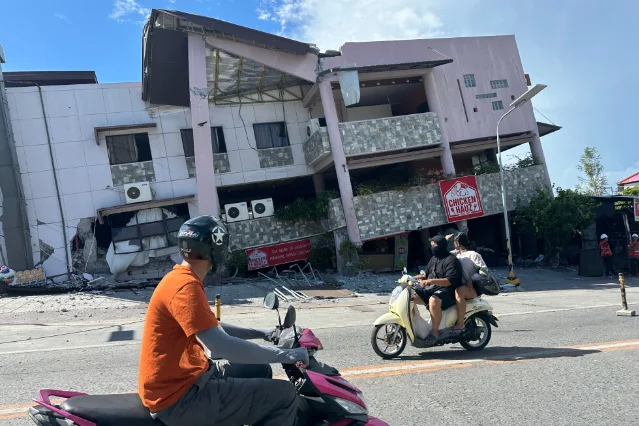
Philippine President Ferdinand Marcos Jr. ordered all schools closed in affected provinces and directed disaster response agencies to begin work immediately.
Why this matters. The Philippines sits on the Pacific Ring of Fire and is one of the world's most earthquake-prone countries. Earthquakes of this magnitude can cause significant structural damage even at depths of 33 km — shallower quakes carry even more destructive power at the surface. Rescue operations were ongoing Monday afternoon; the death toll was expected to rise.3
What to watch. The immediate risk is aftershocks, which can bring down structures already weakened by the main quake. Searchers were still looking through collapsed buildings in General Santos City as of Monday evening. Mindanao's remoter areas may have suffered damage not yet reported.
Peru's presidential race is down to almost nothing
Peru voted Sunday in a runoff election, and by Monday with 94% of ballots counted, neither candidate had a clear win.
Conservative Keiko Fujimori and leftist Roberto Sánchez were separated by less than one percentage point.4 Al Jazeera reported Sánchez edging into the slimmest of leads with those returns in, while Reuters noted Sánchez also held a slight lead by Monday afternoon.5
Who are these two? Fujimori is the daughter of jailed former president Alberto Fujimori, who governed Peru in the 1990s and is serving a 25-year sentence for corruption and human rights abuses. She has run for president three times and lost twice. Sánchez is a leftist congressman who ran on higher mining royalties and reducing crime. Peru has one of the highest murder rates in South America, and both candidates made security a major theme.
Loading content card…
Why this matters. Peru is the world's second-largest copper producer, and mines are the main engine of its economy. A Sánchez presidency would likely mean higher taxes on mining companies — which could affect global copper supply and prices, with knock-on effects for manufacturing and construction worldwide. A Fujimori presidency would mean more continuity with pro-business policies but comes with significant political baggage given her family's history.
What to watch. The final count could take several more days. Fujimori has contested results in two previous elections — 2016, which she narrowly lost to Pedro Kuczynski, and 2021, which she lost to Pedro Castillo. International monitors are on the ground. Any challenge to the result would likely drag the country into weeks of political uncertainty.
Xi's visit to North Korea ends with pledges, not breakthroughs
Chinese President Xi Jinping wrapped up a two-day state visit to Pyongyang on Monday — his first trip to North Korea since 2019, and the first by any major leader in recent years.6
The visit produced warm optics and vague promises. Xi and Kim Jong Un pledged to deepen cooperation in trade, agriculture, construction, and technology. Xi said China and North Korea should strengthen exchanges "in diplomacy, law enforcement, and the military." Kim displayed what North Korea called a new nuclear fuel production facility in state media photos ahead of the meeting — but the nuclear issue itself was notably absent from the summit's public agenda.
Analysts say that's no accident. North Korea has repeatedly declared its nuclear status non-negotiable. China officially still supports "denuclearization of the Korean Peninsula" but has not been pressing Kim on it publicly. According to Australian Broadcasting Corporation's reporting, experts assessed that the discussions most likely focused on shared diplomatic interests, Taiwan, and Japan's rearmament — not the bomb.
Why this matters. Xi's visit was partly about reasserting Chinese influence over a neighbor that has been drifting closer to Russia since 2022. North Korea has reportedly supplied artillery shells and weapons to Russia's war in Ukraine, and Kim visited Moscow last year. Beijing wants to remain Pyongyang's most important patron, not Moscow. At the same time, Xi was sending a signal to Washington: this week's visit comes just after Trump hosted Xi at Mar-a-Lago earlier in 2026.
What to watch. The main near-term question is whether China and North Korea will announce any economic agreements, particularly around reopening trade and tourism ties that were almost entirely frozen during the Covid years. Beijing wants to rebuild economic leverage; Pyongyang wants investment without giving up its weapons programs. Whether those interests align is the real test.6
References
- 1Arab News: Trump says Israel and Iran looking to do an immediate ceasefire
- 2CBS News live updates: Iran and Israel say attacks halted
- 3AP News: 7.8 magnitude quake in Philippines kills at least 35
- 4AP News: Keiko Fujimori and Roberto Sánchez in tight race
- 5Al Jazeera: Race tied between left and right in Peru presidential vote
- 6ABC News: Xi pledges deeper cooperation with North Korea
Add more perspectives or context around this Post.